Track Your Crohn's Disease Symptoms
Stop guessing which foods trigger your flares. Flarely tracks your meals, symptoms, and bowel movements — then uses AI to find the delayed patterns you'd never catch on your own.

Why tracking Crohn's is so hard
Crohn's disease doesn't follow simple rules. A meal that felt fine on Monday can trigger cramping, urgency, or a full flare by Wednesday. Food reactions in Crohn's can be delayed anywhere from 12 to 72 hours — sometimes longer if your small bowel is involved. That delay makes it nearly impossible to connect what you ate with how you feel without consistent, structured tracking.
And it's rarely just one thing. Your triggers shift depending on stress, sleep, inflammation levels, and whether you're in remission or actively flaring. A food you tolerated fine during remission can wreck you during a flare. High-fiber foods, raw vegetables, nuts, dairy, high-FODMAP ingredients — the list of suspects is long, and it's different for every Crohn's patient. Strictures can make texture and fiber content matter as much as ingredients.
On top of that, tracking burns you out. Writing down every meal, every bathroom visit, every stress spike — most people give up within a week. By the time your next GI appointment rolls around, you're back to "I think it was maybe the pizza?" That's not data your gastroenterologist can work with. Flarely is built to solve exactly this: fast logging, AI pattern detection, and reports your doctor can actually use.
How Flarely helps you track Crohn's
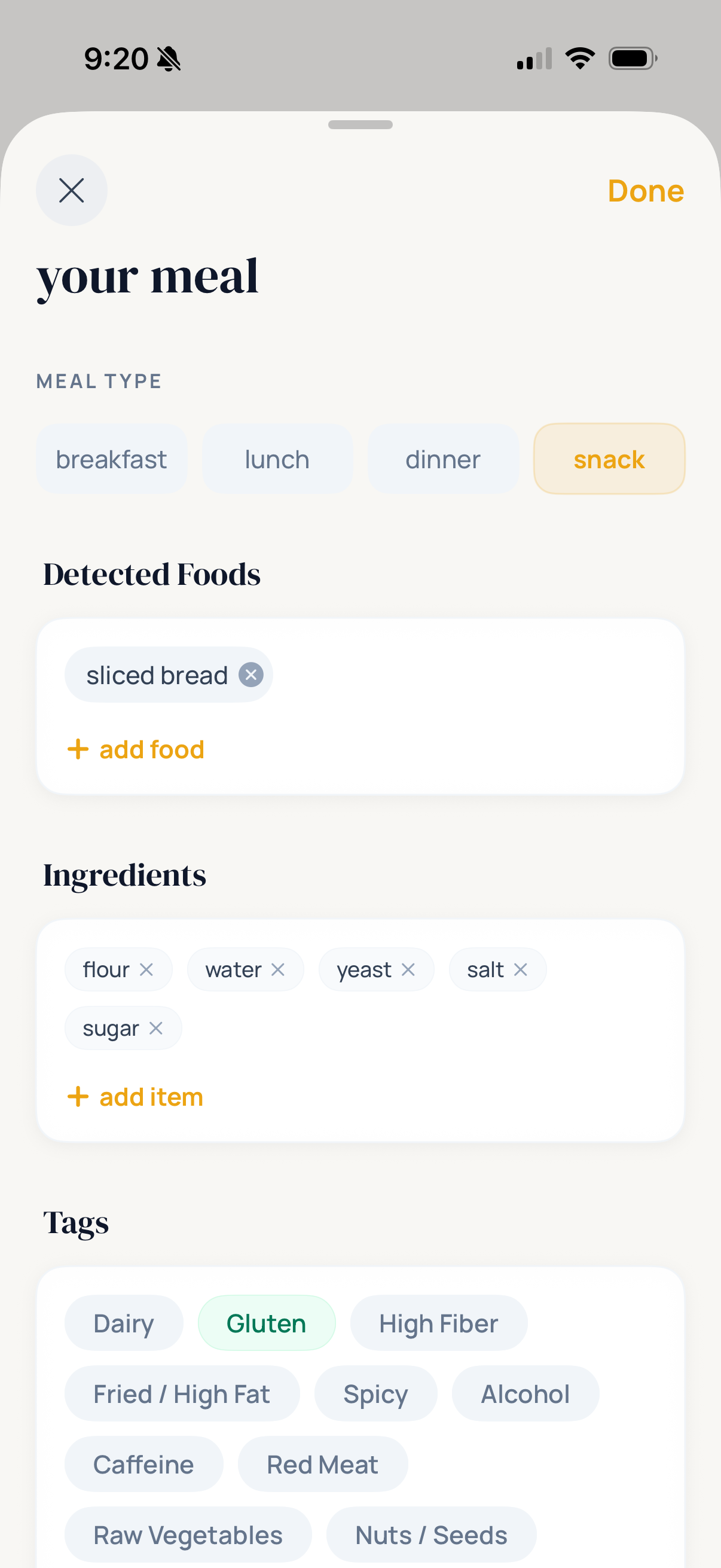
Snap your meal. Know what's in it.
Take a photo of your food and Flarely's AI identifies every ingredient — including hidden Crohn's triggers like inulin, sorbitol, and high-FODMAP components. No more squinting at ingredient labels or manually logging each item. It flags common irritants for Crohn's patients automatically, so you can eat with more awareness and less anxiety.
Find the 48-hour trigger you've been missing
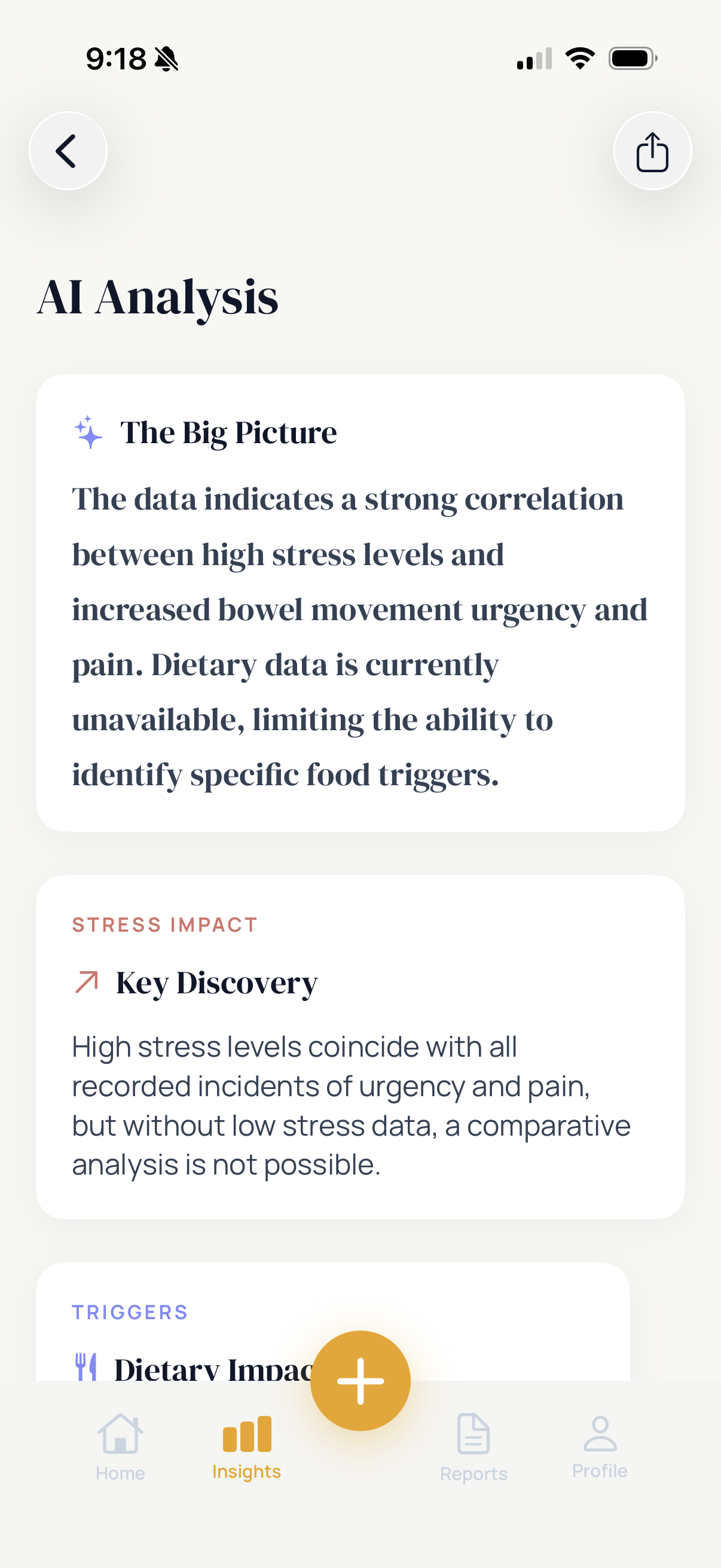
Crohn's reactions aren't immediate. That flare on Thursday might trace back to Tuesday's dinner. Flarely's AI analyzes your logs across a 12-to-72-hour window to find correlations between meals, stress, sleep, and symptoms — the kind of delayed patterns that are invisible in a notebook or spreadsheet. This is the feature that changes everything.
It's not just food. Stress and sleep matter too.
Every Crohn's patient knows that stress can trigger a flare independent of diet. Poor sleep compounds it. Flarely tracks stress levels and sleep quality alongside your meals and symptoms, so the AI can surface multi-factor patterns — like dairy appearing alongside worse symptom days when you've also had high stress and poor sleep. Your triggers are rarely just one thing.

Walk into your GI appointment with real data
Generate a 30-day report showing your symptom trends, food correlations, bowel movement patterns, and flare frequency. Pull it up on your phone or send it ahead of your appointment. Give your gastroenterologist the data they need — not vague recollections from the past two months.

What to track when you have Crohn's
Consistent daily tracking is what turns scattered symptoms into actionable patterns. Here's what matters most for Crohn's disease.
Bowel Movements
Bristol scale type, frequency, urgency, blood, and mucus. The kind of detail your GI can work with at your next appointment.
Food & Ingredients
Log meals via AI photo or manual entry. Captures individual ingredients, FODMAP levels, fiber content, and known Crohn's irritants like insoluble fiber and lactose.
Symptoms
Abdominal pain, cramping, bloating, fatigue, nausea, joint pain. Track severity and location — Crohn's can affect anywhere from mouth to rectum.
Stress Levels
Stress is one of the most common flare triggers for Crohn's patients. A daily stress check helps the AI detect stress-symptom correlations over time.
Sleep Quality
Poor sleep increases inflammation and lowers your threshold for flares. Tracking sleep alongside symptoms reveals compounding patterns.
Medications
Log biologics, immunomodulators, steroids, and supplements. Correlate medication timing with symptom changes to see what's actually working.
Learn more about tracking Crohn's
Practical guides and tools to help you take control of your Crohn's disease.
Your Crohn's has patterns.
Let's find them.
Free to download. 14-day trial of everything.
Not ready to download yet?
Get Crohn's tracking tips and product updates — straight to your inbox.
No spam, ever. Unsubscribe anytime.
Flarely is a tracking tool, not medical advice. It does not diagnose, treat, or cure any condition. Always consult your gastroenterologist before making changes to your diet or treatment plan.