Track Your Ulcerative Colitis Symptoms
I built Flarely because I have UC and got tired of guessing what was causing my flares. It tracks your meals, urgency, bloody stools, and stool frequency — then uses AI to find the delayed patterns your food diary never could.

Living with UC means living with uncertainty
Urgency controls your life. You map out every bathroom before you leave the house. You cancel plans because you can't risk being 20 minutes from a toilet. And the worst part is not knowing what set it off — was it the salad at lunch, the stress from work, or is this the start of a real flare? When your colon is inflamed, everything feels like a threat.
UC patients tend to blame the last thing they ate. But colitis reactions are often delayed 12 to 72 hours. That dairy you had on Monday might be the reason you're seeing blood on Wednesday. And your triggers shift — what you tolerated in remission can destroy you during a flare. Dairy, high-fat foods, alcohol, raw vegetables, spicy food — the suspect list is long, and it's different for every person with UC. Without structured tracking, you're just guessing.
I know this because I live it. I have ulcerative colitis, and I built Flarely after years of keeping half-hearted food diaries that never led anywhere. By the time I saw my GI, I couldn't remember what I'd eaten three days ago, let alone connect it to a flare. Flarely exists to close that gap: fast logging so you actually stick with it, AI that catches the delayed patterns you'd miss, and reports that give your gastroenterologist something real to work with.
How Flarely helps you track ulcerative colitis
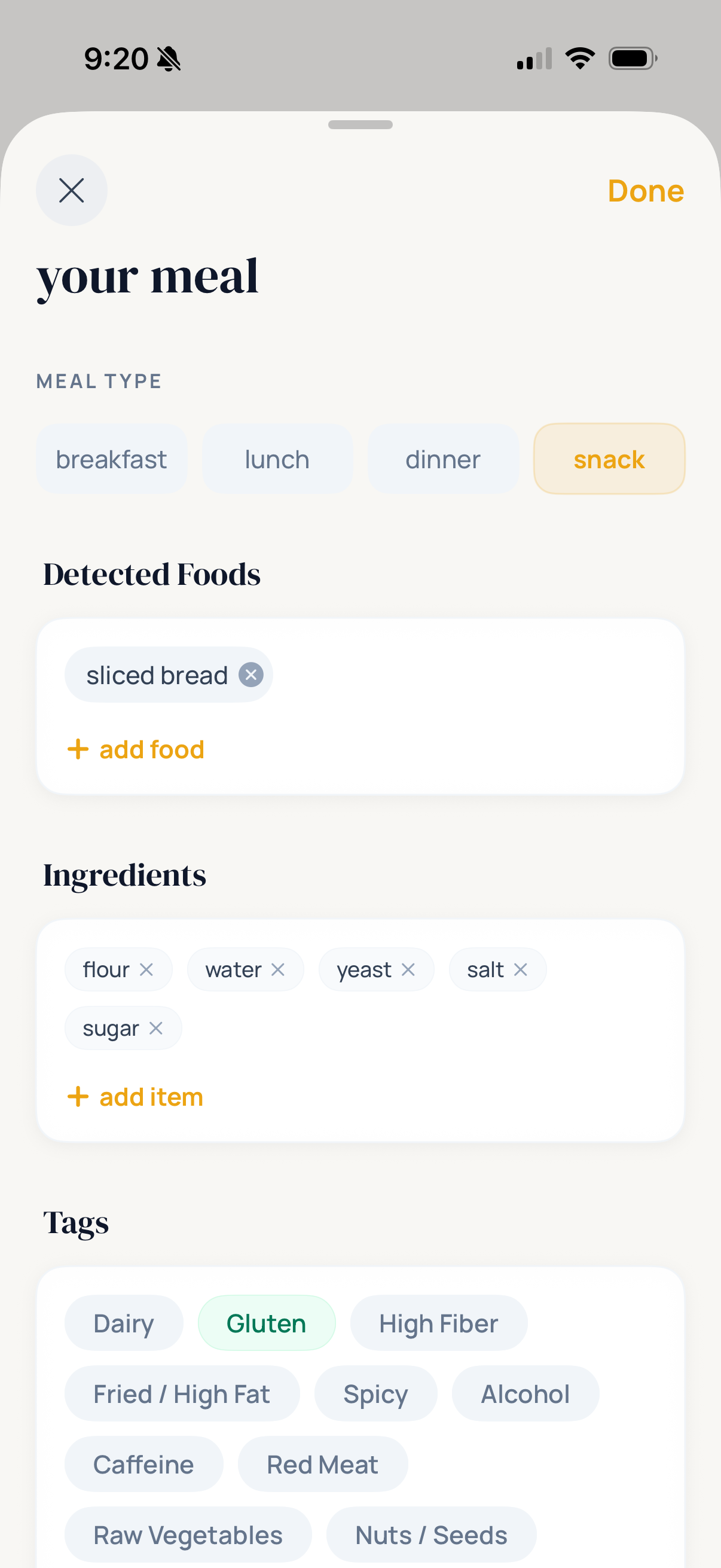
Know exactly what's in your meal
Snap a photo of your food and Flarely's AI breaks down every ingredient — flagging common UC triggers like dairy, high-fat content, alcohol-based sauces, and insoluble fiber. No more guessing what was in that restaurant dish or manually typing out every component. It surfaces the things UC patients need to watch: lactose, saturated fat, excess sugar, spicy ingredients. You eat. It logs. You learn.
Stop blaming the last thing you ate
With UC, the blood and urgency you're dealing with today might trace back to something you ate two days ago. Your colon reacts on its own timeline, not the one your brain assumes. Flarely's AI analyzes your logs across a 12-to-72-hour window to surface the real correlations — the ones that are invisible when you're just trying to remember what you had for dinner. This is the difference between "I think dairy is bad" and having data to talk about with your GI.
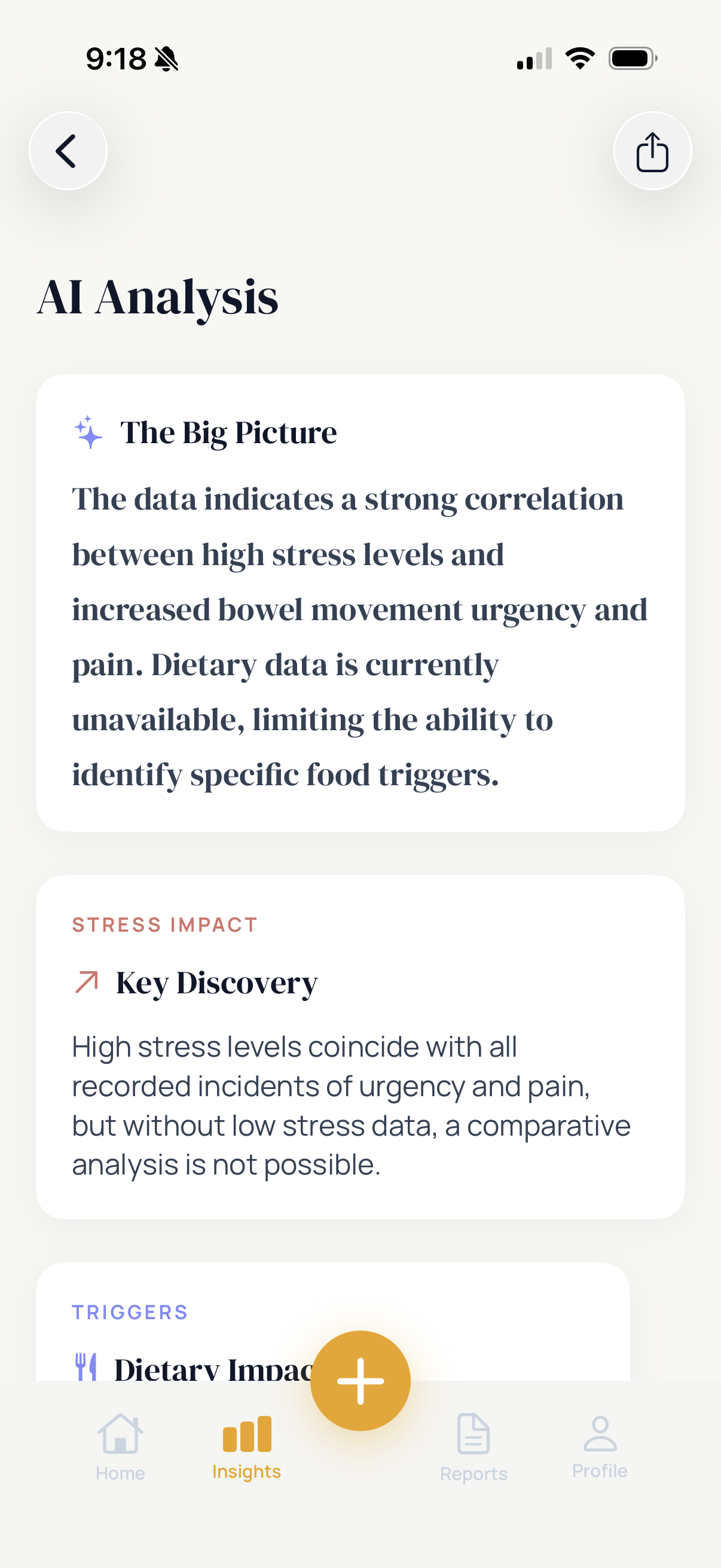
Stress isn't "just in your head." It triggers flares.
Ask any UC patient — a stressful week can send you into a flare faster than any food. Research backs this up: psychological stress disrupts the gut barrier and amplifies colonic inflammation. Flarely tracks stress and sleep alongside your meals and symptoms, so the AI can surface compound patterns — like meals high in fat appearing alongside worse symptom days when you've also had high stress and poor sleep. Your flares aren't random. They're multi-factorial, and Flarely captures them that way.

Give your GI data, not "I think dairy is bad"
Your GI appointments are short. You get maybe 15 minutes to explain months of symptoms. Flarely generates a 30-day report showing stool frequency trends, blood occurrence, urgency patterns, food correlations, and flare timelines. Pull it up on your phone or send it ahead. Your gastroenterologist can see exactly how your UC has been behaving — not your best guess from memory. Better data means better conversations with your GI.

What to track when you have ulcerative colitis
Consistent tracking starts with the right data points. These are the signals worth logging so you can show your GI what's been happening — not what you remember.
Stool Frequency & Urgency
How many times per day and how urgent. These two numbers are the data your GI uses to understand how your UC has been behaving — and a clear pattern of change is exactly the kind of thing worth bringing to your next appointment.
Blood in Stool
Visible blood is the hallmark UC symptom. Tracking when it appears, how much, and what preceded it helps identify whether you're heading into a flare or recovering from one.
Food & Ingredients
Log meals via AI photo or manual entry. Captures individual ingredients, dairy content, fat levels, and common UC irritants. The AI needs this data to find your personal trigger patterns.
Stress Levels
Stress is one of the strongest non-dietary flare triggers in UC. A daily stress check lets the AI detect when stress is amplifying your food sensitivities or triggering symptoms on its own.
Sleep Quality
Poor sleep drives inflammation and weakens your gut barrier. Many UC patients notice flares worsen after consecutive bad nights. Tracking sleep reveals these compounding patterns.
Medication Adherence
Log your mesalamine, biologics, steroids, and supplements. Missed doses of 5-ASA medications are a common cause of UC flares. Correlate medication timing with symptom changes.
Learn more about tracking UC
Guides and tools to help you take control of your ulcerative colitis.
Your UC has patterns.
Let's find them together.
Free to download. 14-day trial of everything.
Not ready to download yet?
Get UC tracking tips and product updates — straight to your inbox.
No spam, ever. Unsubscribe anytime.
Flarely is a tracking tool, not medical advice. It does not diagnose, treat, or cure any condition. Always consult your gastroenterologist before making changes to your diet or treatment plan.